Custom Plastic Sheet
FROM PELLETS TO SHEET OR COIL, CONTINUOUSLY
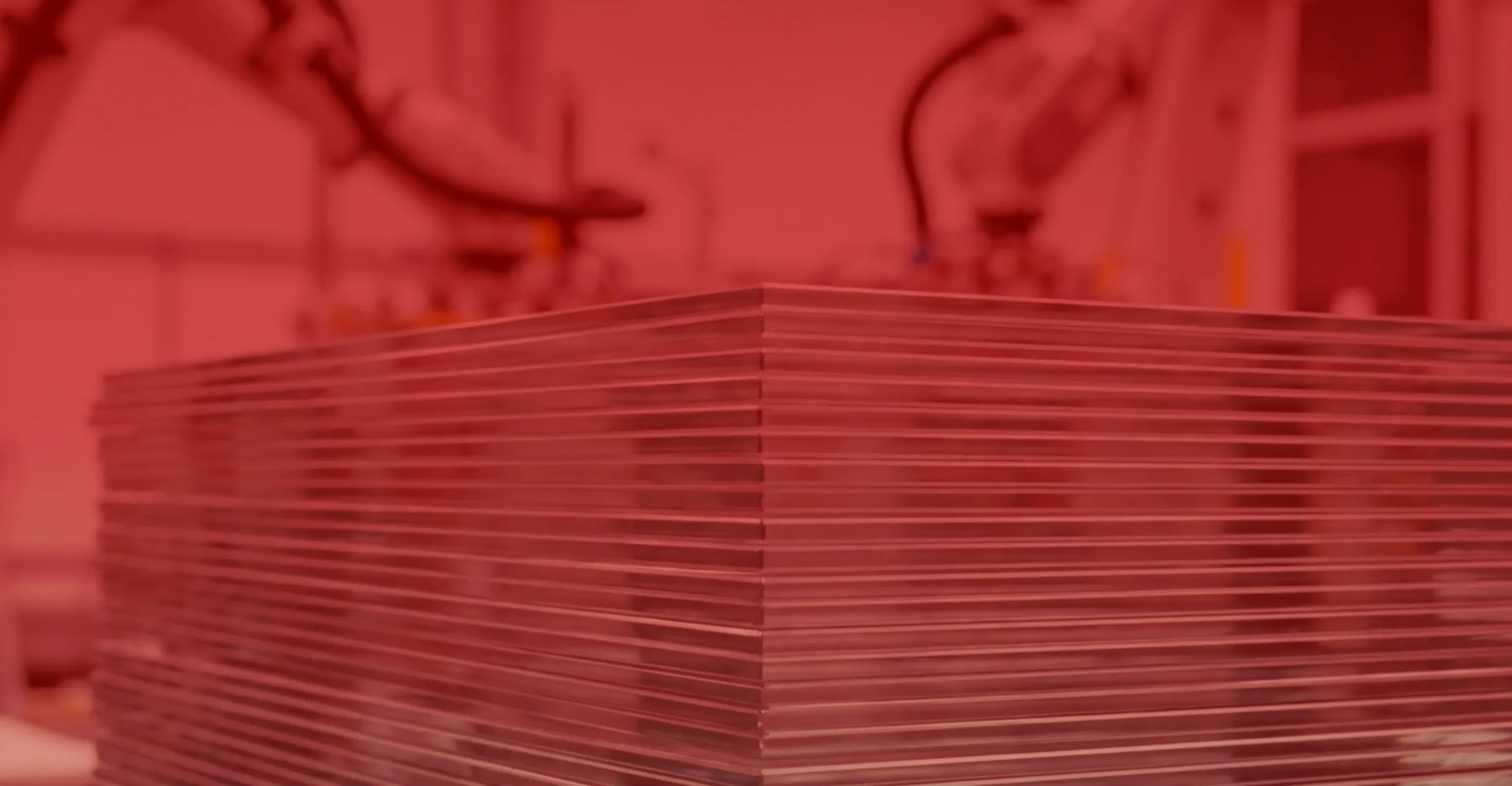
We produce plastic sheets and plates up to 15 mm thick in a wide range of materials and combinations. The raw material that feeds thermoforming, straight from our extrusion line.
How does it work?
From granule to perfect sheet
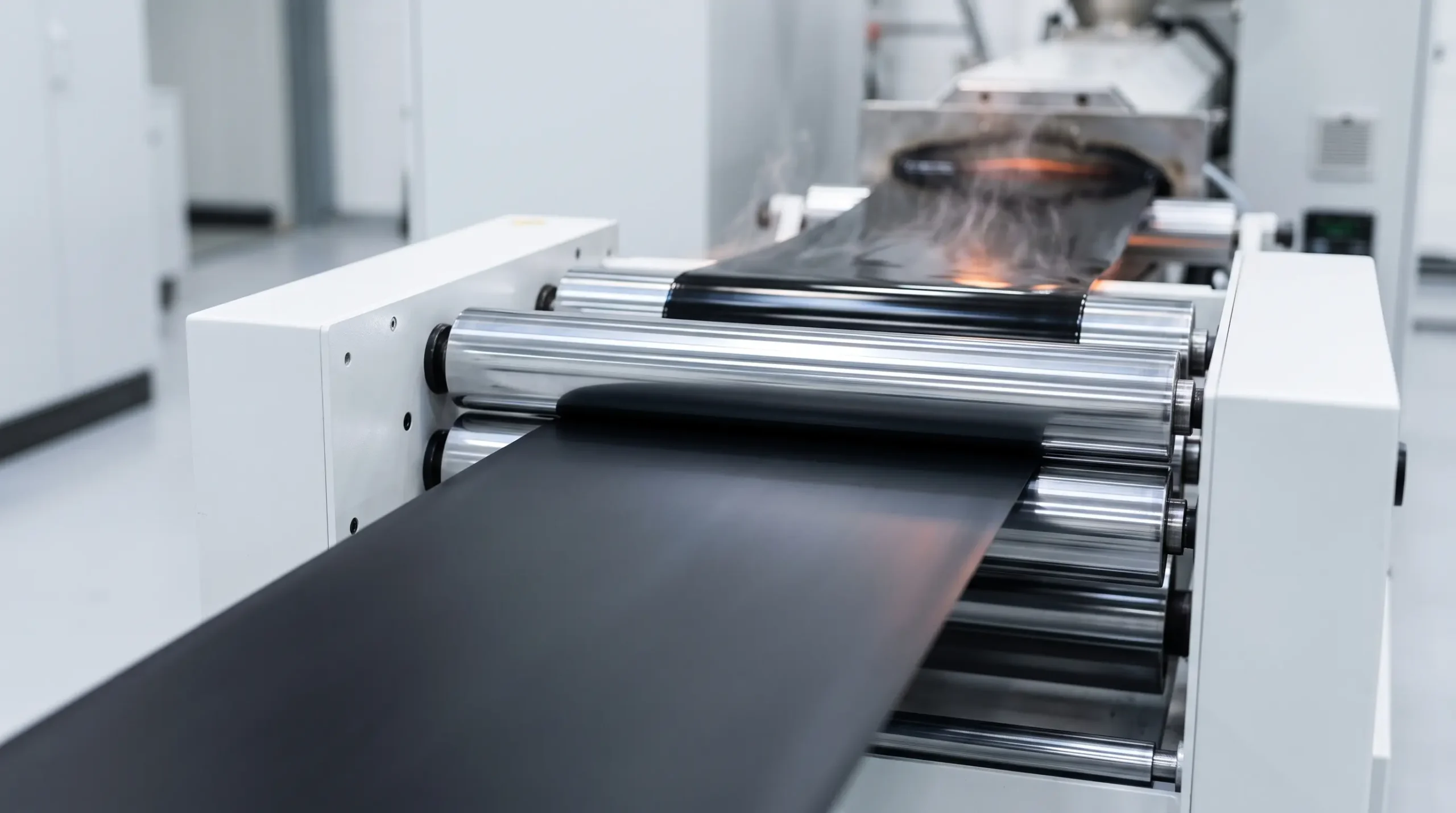
Sheet extrusion is a continuous and highly efficient process. Plastic granules enter at one end of the machine and a uniform sheet comes out the other, with the exact thickness and width you need.
The result can be cut into fixed-format plates to feed the thermoforming machine directly, or wound into a roll for storage and transport.
Feeding
Plastic granules or flakes fall through the hopper into the extruder screw. We can also incorporate additives, colorants or recycled materials directly at this stage.
Melting and mixing
The screw rotates inside the heated barrel and melts the plastic while homogenizing it. In coextrusion, several screws work in parallel to combine different materials in layers.
Exit through the flat die
The molten material passes through a flat-lip die that gives it the sheet shape. Width and thickness are controlled with precision from here.
Calibration and cooling
Polished steel rollers and cold water solidify the sheet and give it the exact thickness. The surface finish is defined at this stage: matte, glossy, textured.
Cutting or winding
The sheet comes out cut into cut sheets of fixed length (ready for the thermoforming machine) or wound on a roll for easy storage and continuous feeding.
Sheet or Coil
 01
01
Fixed Format Sheet
Sheets cut to the exact size required by the thermoforming machine. Stackable and easy to handle. Ideal for large parts or when working with very rigid or thick material.
 02
02
Continuous Coil
The sheet is wound into a roll to feed the thermoforming machine or other conversion lines continuously. It minimizes waste and maximizes productivity in long runs.
Coextrusion: the best of each material
Thanks to coextrusion we can combine two or more types of plastic in a single multilayer sheet. Each layer contributes a different property: strength, barrier, color, flexibility or cost efficiency.

Gas and moisture barrier
An inner barrier material layer (EVOH, PA) between PP •PET layers. Essential for food containers that need to protect the contents without the cost of a 100% barrier material.

Color and surface finish
Surface layer of material with specific color or gloss over a core of recycled or more economical material. The visual result is identical to a premium material, at a much lower cost.

Combined technical properties
Rigid outer layer to maintain shape with a flexible core to absorb impacts. Or a layer with UV additive over a standard base. Coextrusion multiplies design possibilities.
We work with the plastics you need
We extrude the full range of technical and general-purpose thermoplastics. If you do not find your material on the list, ask us: our experience with specialty plastics, compounds and custom blends allows us to take on almost any project.
01
ABS
The most common in thermoforming
HOUSINGS • PANELS • TECHNICAL PACKAGING
02
PP
Lightweight, flexible and food-grade
CONTAINERS • TRAYS • AUTOMOTIVE
03
PET / PETG
Transparent and recyclable
PACKAGING • BLISTERS • FOOD
04
PC
High impact and optical resistance
VISORS • PROTECTIONS • SIGNAGE
05
HIPS / PS
Economical and easy to form
DISPOSABLE PACKAGING • DISPLAYS
06
PEEK / PEI
High temperature and chemical resistance
MEDICAL • AEROSPACE • INDUSTRY
07
rPET / Bio
Recycled or biodegradable material
SUSTAINABLE PACKS • CIRCULAR ECONOMY
08
PA / POM
Engineering technical plastic
TECHNICAL COMPONENTS • INDUSTRY
09
BLENDS
Custom formulas
CUSTOMIZED ACCORDING TO PROJECT REQUIREMENTS
This is where the raw material for Thermoforming comes from
The extruded sheet is exactly the input to the thermoforming process. We control both ends of the chain: we extrude the sheet with the exact properties the thermoforming machine needs, and we convert it into the final part.
Paso 1 — Extrusion
We manufacture the sheet
We convert plastic pellets into sheet with the exact thickness, width, material and finish. It comes out as cut sheet or roll ready for the next process.
Paso 2 — Extrusion
We manufacture the sheet
We convert plastic pellets into sheet with the exact thickness, width, material and finish. It comes out as cut sheet or roll ready for the next process.
Paso 3 — Extrusion
We manufacture the sheet
We convert plastic pellets into sheet with the exact thickness, width, material and finish. It comes out as cut sheet or roll ready for the next process.
Paso 4 — Extrusion
We manufacture the sheet
We convert plastic pellets into sheet with the exact thickness, width, material and finish. It comes out as cut sheet or roll ready for the next process.
Industries we serve

Packaging
PET, PP or HIPS sheet for thermoforming trays, blisters, food containers and presentation packaging.
→ Trays → Blisters → rPET

Automotive
ABS and PC-ABS cut sheets for interior panels, trunk covers and body cladding.
→ ABS panels → Interior

Medical
PETG, PP and biocompatible material sheet for sterile containers, instrument trays and diagnostic components.
→ Sterile → PETG → Biocompatible

Construction
Thick plates in PP, PC or PVC for linings, protective covers and construction elements.
→ High thickness → Linings